PEAK Daily Map
Every player in the world climbs the same mountain each day, and the PEAK Map rotates at 17:00 UTC. Here is the one that is live right now, with every luggage, amulet, belltower and tomb marked on it.
What is the PEAK Map?
A quick explanation of what rotates, what stays the same, and where the PEAK Map item locations actually come from.
PEAK is a co-op climbing game from Aggro Crab and Landfall where four scouts share one mountain, one set of supplies, and one very long fall. The mountain itself is not generated per lobby — the game ships a fixed set of prebuilt mountains and puts every player in the world on the same one for a full day.
Because the mountain is identical for everyone until the next reset, the locations of luggage, amulets, belltowers and tombs on it are fixed too. Once someone has climbed a given mountain and recorded where everything sits, that map is accurate for every other group playing that day.
That is what this page shows: the mountain that is live right now, with every recorded item plotted on a top-down screenshot of it. Nothing here predicts random drops — it marks containers and landmarks that are baked into the level.
- Every player worldwide climbs the same mountain on the same day.
- Item and landmark positions are fixed for the whole day, not randomised per lobby.
- The rotation runs through 21 mountains and then repeats, so today's map will come back around in three weeks.
- Each mountain is captured across five segments, from the shore at the bottom to the summit.
How the data is collected
- Step 1
The game rotates
PEAK walks through its built-in list of mountains in order, one per day, wrapping back to the start after the last one.
- Step 2
A plugin auto-climbs
An open-source BepInEx plugin launches the game in offline mode and drives it through every mountain in the list without a player.
- Step 3
Positions are exported
As each segment loads, the plugin records the world position of every luggage, amulet, belltower, tomb and animal, and photographs the segment at 7680×4320.
- Step 4
Markers are drawn
Each recorded position is projected onto its screenshot, so the marker you hover sits where the object actually is in the level.
What every PEAK Map marker means
Marker names below are the game's own labels, exactly as they appear in your inventory, so what you read on the PEAK Map matches what you read in game.
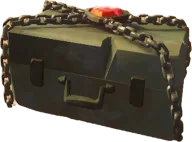
Luggage
Containers scattered across the mountain, and the main source of gear on a climb. They are the densest markers on every map — a typical mountain carries dozens — so the useful question is never "where is luggage" but "which luggage is worth leaving my route for".
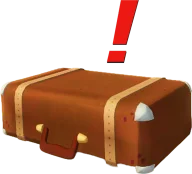
- LUGGAGE
- The standard suitcase, and the most common marker on any map — a single mountain holds dozens. Worth opening when it sits on your line, rarely worth a detour.
- BIG LUGGAGE
- A larger case holding more than a standard suitcase. Uncommon enough to be worth a short detour, and bulky enough to spot from a distance once you know roughly where to look.
- EXPLORER'S LUGGAGE
- A rare case, and usually placed somewhere awkward — a ledge, an overhang, a spot that costs real stamina to reach. Worth planning the approach before you start climbing rather than improvising at the wall.
- ANCIENT LUGGAGE
- One of the scarcest containers on the mountain; only a handful exist across all five segments. When today's map puts one near your route, it is the single marker most worth building a plan around.
- CLOWN LUGGAGE
- A distinctly themed case — unmistakable once you are standing next to it, easy to walk straight past from any distance. Uncommon, and a good reason to check the map before committing to a line.
- MIMIC LUGGAGE
- A mimic. In game it carries exactly the same label as an ordinary suitcase, so nothing about the thing in front of you gives it away. Checking its position against this map is the only way to know which one it is before you open it.
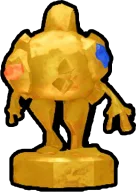
- ANCIENT STATUE
- A tall stone statue built into the level. It never moves and it reads from a long way off, which makes it the most reliable thing on a mountain to orient yourself by when the terrain starts repeating.





Amulets
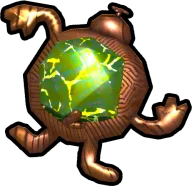
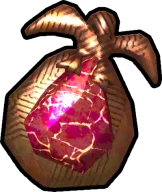
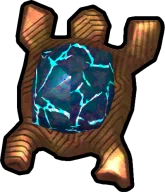
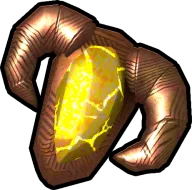
Rare wearable items that change how a climb plays rather than just topping up supplies. At most a couple appear per mountain, which makes them the markers most worth routing a whole ascent around.
- SCOUT'S GENEROSITY
- The duplication amulet. Scarce enough that most runs never see one, so a marked spawn justifies a detour on its own.
- SCOUT'S INITIATIVE
- The double jump amulet. It changes which routes are climbable at all, which is why it is worth collecting early in a run rather than picking up on the way past.
- SCOUT'S TENACITY
- The healing amulet. Most valuable on the long ascents where a team has already burned through its medical supplies and the summit is still above them.
- SCOUT'S AMBITION
- The stamina amulet. Stamina is the limiting factor on most climbs, so of the four this is the one that most directly shortens a run.
Animals & wildlife
Living things on the mountain, some harmless and some decidedly not. They hold fixed spawn points for the whole day, so a marker here is as reliable as a landmark — the difference is whether you want to walk toward it or around it.
- CAPYBARA
- A capybara. Harmless, and it holds the same spot all day — which quietly makes it one of the better landmarks in segments where every stretch of terrain looks like the last.
- BEEHIVE
- A beehive. The value of knowing where it is comes entirely from arriving deliberately instead of blundering into it halfway up a wall with no stamina left.
- EARLY WORM
- An early worm spawn. Small, fixed, and easy to miss completely unless you already know the spot — which is most of the reason it is on the map at all.
- ANTLION
- An antlion. It sits buried with only its head above the surface, so the marker shows the one part you will actually see. Worth knowing before you commit to crossing that ground.




Landmarks
Fixed structures built into the level. They are the things you navigate by, and the only markers on this page that are visible from far enough away to steer a climb with.
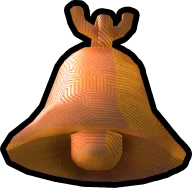
- BELLTOWER
- A belltower. The game treats these as safe zones in the Gloom, which is what makes them worth routing through rather than past on the maps where the Gloom turns up.
- TOMB
- A tomb entrance, and the most conditional marker on this page. It only exists when the third segment is the Mesa, and only when the entrance is actually open — on some Mesa days it is sealed and nothing is marked. If today's map shows one, it is genuinely there.
When does the PEAK Map reset?
The rotation is on a fixed UTC schedule, which lands at a different local time depending on where you are.
PEAK swaps mountains once every 24 hours at 17:00 UTC. There is no partial or staggered rollout — the moment the reset passes, new runs start on the next mountain in the list everywhere in the world.
A run already in progress keeps the mountain it started on. If you are mid-climb when the reset hits, nothing changes underneath you; the new map applies to the next run you start.
The table lists the local clock time of the next reset in a few common timezones. It accounts for daylight saving, so it may shift by an hour across the year.
The PEAK Map rotates every day at 17:00 UTC.
| City | Next reset (local) |
|---|---|
| Los Angeles | Sat 10:00 |
| New York | Sat 13:00 |
| São Paulo | Sat 14:00 |
| London | Sat 18:00 |
| Berlin | Sat 19:00 |
| Warsaw | Sat 19:00 |
| Mumbai | Sat 22:30 |
| Shanghai | Sun 01:00 |
| Tokyo | Sun 02:00 |
| Sydney | Sun 03:00 |
The full PEAK Map rotation
The PEAK Map cycles through 21 mountains in a fixed order and then starts over, so every map is predictable well ahead of time.
| Date | Map | Position in cycle |
|---|---|---|
| FriToday | Level 20 | 21 / 21 |
| Sat | Level 0 | 1 / 21 |
| Sun | Level 1 | 2 / 21 |
| Mon | Level 2 | 3 / 21 |
| Tue | Level 3 | 4 / 21 |
| Wed | Level 4 | 5 / 21 |
| Thu | Level 5 | 6 / 21 |
Show the remaining 14 datesShow fewer dates
| Date | Map | Position in cycle |
|---|---|---|
| Fri | Level 6 | 7 / 21 |
| Sat | Level 7 | 8 / 21 |
| Sun | Level 8 | 9 / 21 |
| Mon | Level 9 | 10 / 21 |
| Tue | Level 10 | 11 / 21 |
| Wed | Level 11 | 12 / 21 |
| Thu | Level 12 | 13 / 21 |
| Fri | Level 13 | 14 / 21 |
| Sat | Level 14 | 15 / 21 |
| Sun | Level 15 | 16 / 21 |
| Mon | Level 16 | 17 / 21 |
| Tue | Level 17 | 18 / 21 |
| Wed | Level 18 | 19 / 21 |
| Thu | Level 19 | 20 / 21 |
PEAK Map FAQ
What time does the PEAK map change?
Every day at 17:00 UTC. The rotation is global and happens at the same instant for everyone, so the local time depends on your timezone — see the table above for a few common ones.
Is everyone playing the same PEAK map today?
Yes. PEAK does not generate a fresh mountain per lobby. Every group in the world climbs the same mountain between one reset and the next, which is exactly why a shared map of item locations works at all.
How many maps are in the PEAK rotation?
Twenty-one. The game walks through them in order, one per day, and wraps back to the first after the last — so any given mountain comes back around every three weeks.
Can I see tomorrow's PEAK map in advance?
Yes. Because the order is fixed rather than random, every future date is already determined. The rotation table on this page lists the full cycle ahead of time.
Where do the item locations come from?
From an open-source BepInEx plugin that runs the game in offline mode, climbs through every mountain in the rotation automatically, records the position of each luggage, amulet, belltower, tomb and animal, and takes a high-resolution screenshot of each segment.
Why is mimic luggage marked separately?
Because the game does not distinguish it. A mimic shows the same label as an ordinary suitcase when you look at it in game, so the only way to identify one before opening it is to check its position against the map.
Does every map have a tomb?
No. The tomb only appears when the third segment of the day's mountain is the Mesa, and even then only when its entrance is open — on some Mesa days it is sealed. If the map for today marks one, it is open.
Are random item drops shown on the map?
No. The map marks containers, amulets and landmarks that are placed in the level itself. What comes out of a given suitcase is not something a map can tell you.
Is this an official PEAK tool?
No. This is an unofficial fan page. PEAK is made by Aggro Crab and Landfall, and neither studio is affiliated with, endorses or sponsors this site.
Take the PEAK Map with you
Level 20 is live until the next reset. Open the full interactive PEAK Map, or go and get the game.
The interactive PEAK Map and all item location data on this page come from PeakMap, an open-source fan project by qWojtpl. You can also use the original web app directly — if it is useful to you, consider giving the project a star.
This is an unofficial, open-source fan project and is not affiliated with, endorsed, or sponsored by Aggro Crab or Landfall Games. All game assets, icons, screenshots, and trademarks are property of Aggro Crab, Landfall Games and/or their licensors.